
O
verview
Unified Commerce
BOEING GLOBAL SERVICES - UNIFIED COMMERCE
ENTERPRISE COMMERCE | SEARCH & NAVIGATION | DESIGN SYSTEMS
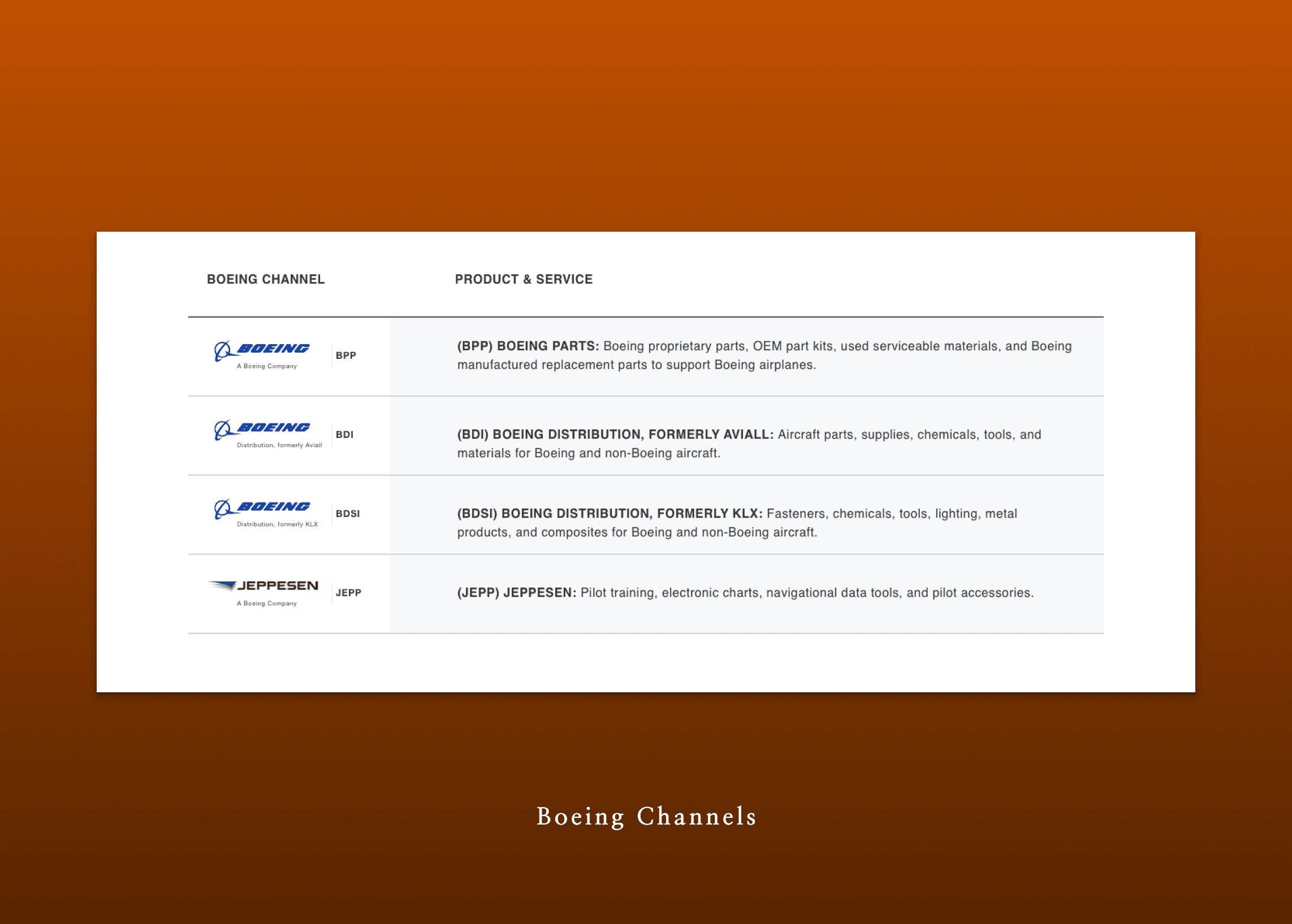
Boeing Global Services operates multiple e-commerce channels selling aviation parts, avionics, digital subscriptions, and flight training. Each channel had grown independently — resulting in inconsistent search, pricing, taxonomy, and login requirements across the same product catalog. Each channel operated as a separate website with its own login, navigation, and data structure — there was no unified platform connecting them.
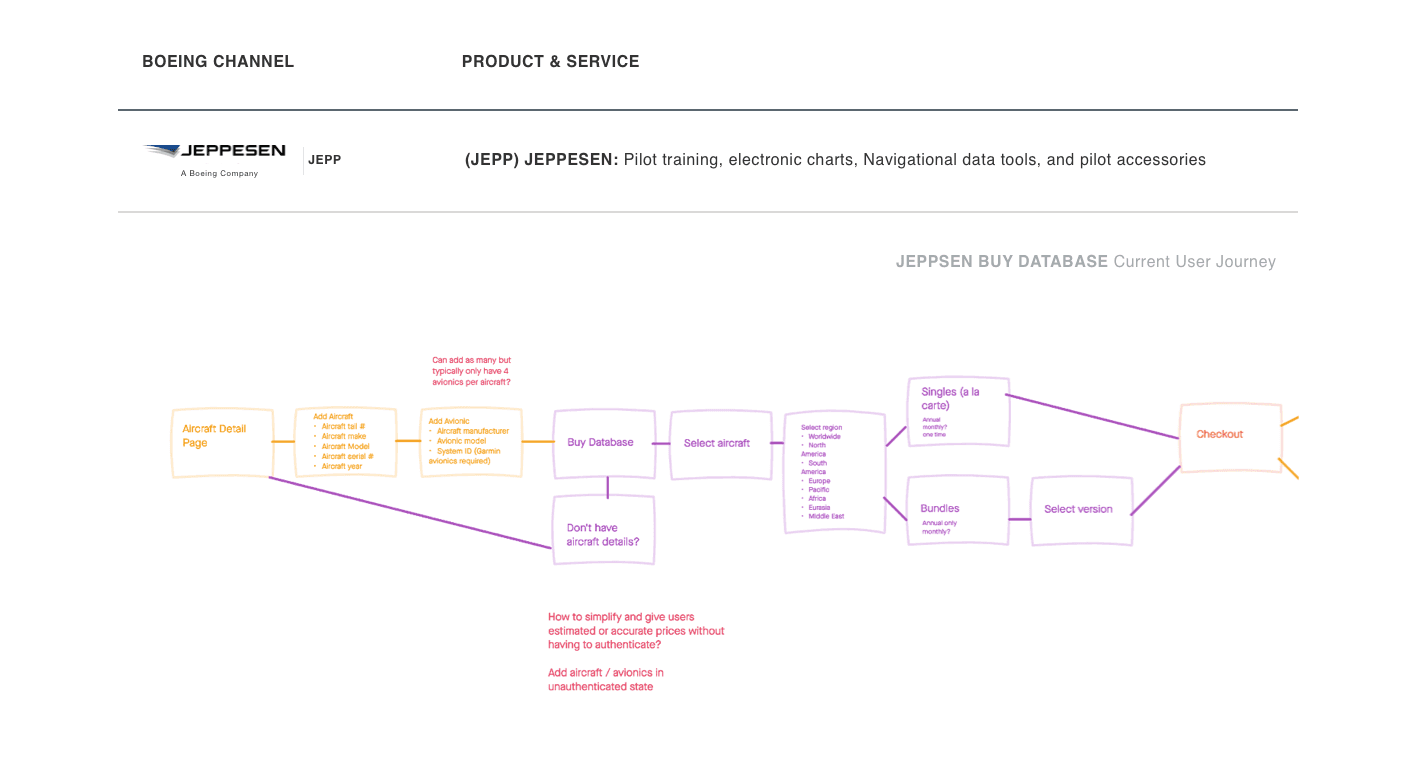
A separate but related challenge existed within Jeppesen, Boeing's aviation data subsidiary, where pilots purchasing navigation database subscriptions faced a confusing configuration process and couldn't see pricing without creating an account.
MY ROLE
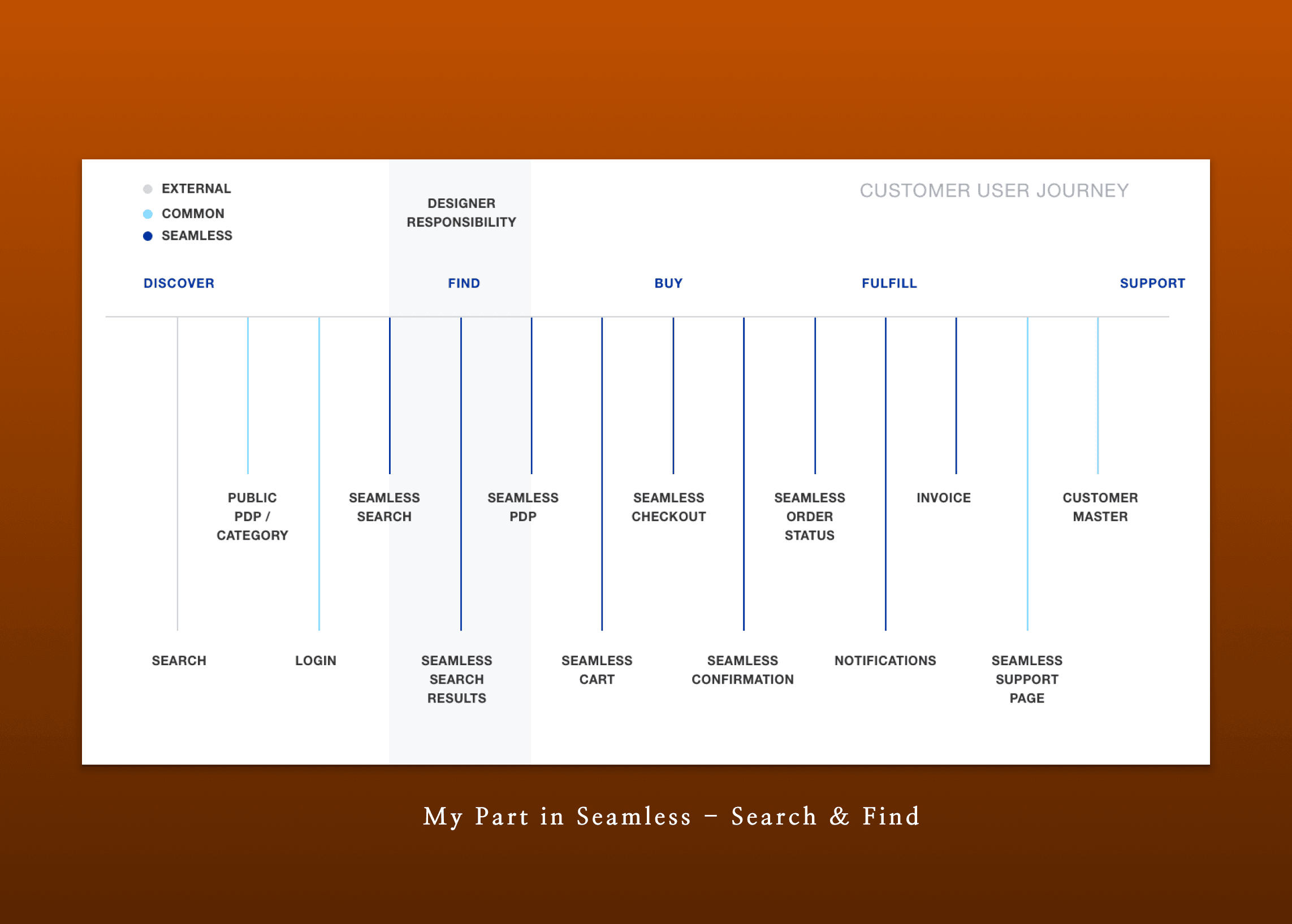
I led the Search & Find experience as part of Boeing's enterprise platform consolidation. I ran weekly discovery sessions with stakeholders across parts, avionics, and digital product teams, defined a unified search and product detail page experience, and designed a separate configuration workflow for Jeppesen's aviation database subscriptions — tested in the field at EAA with active pilots. I also contributed to the Boeing Global Services shared design system.
TIMELINE
2019-2022
TOOLS
SKETCH | INVISION
DELIVERABLES
RESEARCH SYNTHESIS | UNIFIED SEARCH & PDP | PRICING ARCHITECTURE FRAMEWORK | CONFIGURATION WORKFLOW DESIGN | PHASED PROTOTYPE
1
Discovery
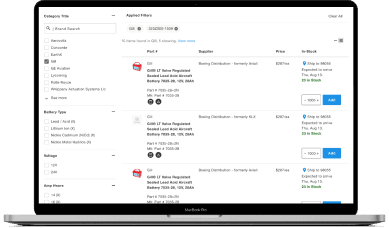
MAPPING ENTERPRISE FRAGMENTATION
Cross-channel analysis revealed systemic inconsistencies across Boeing's commerce platforms:
Overlapping products sold across multiple platforms with inconsistent pricing and metadata
Pricing and availability hidden behind authentication across all channels
Inconsistent taxonomy, navigation structures, and product data
No global search across some channels
Divergent handling of configurable digital products (Jeppesen) versus physical parts
The challenge was not just visual inconsistency — it was structural misalignment across commerce systems.
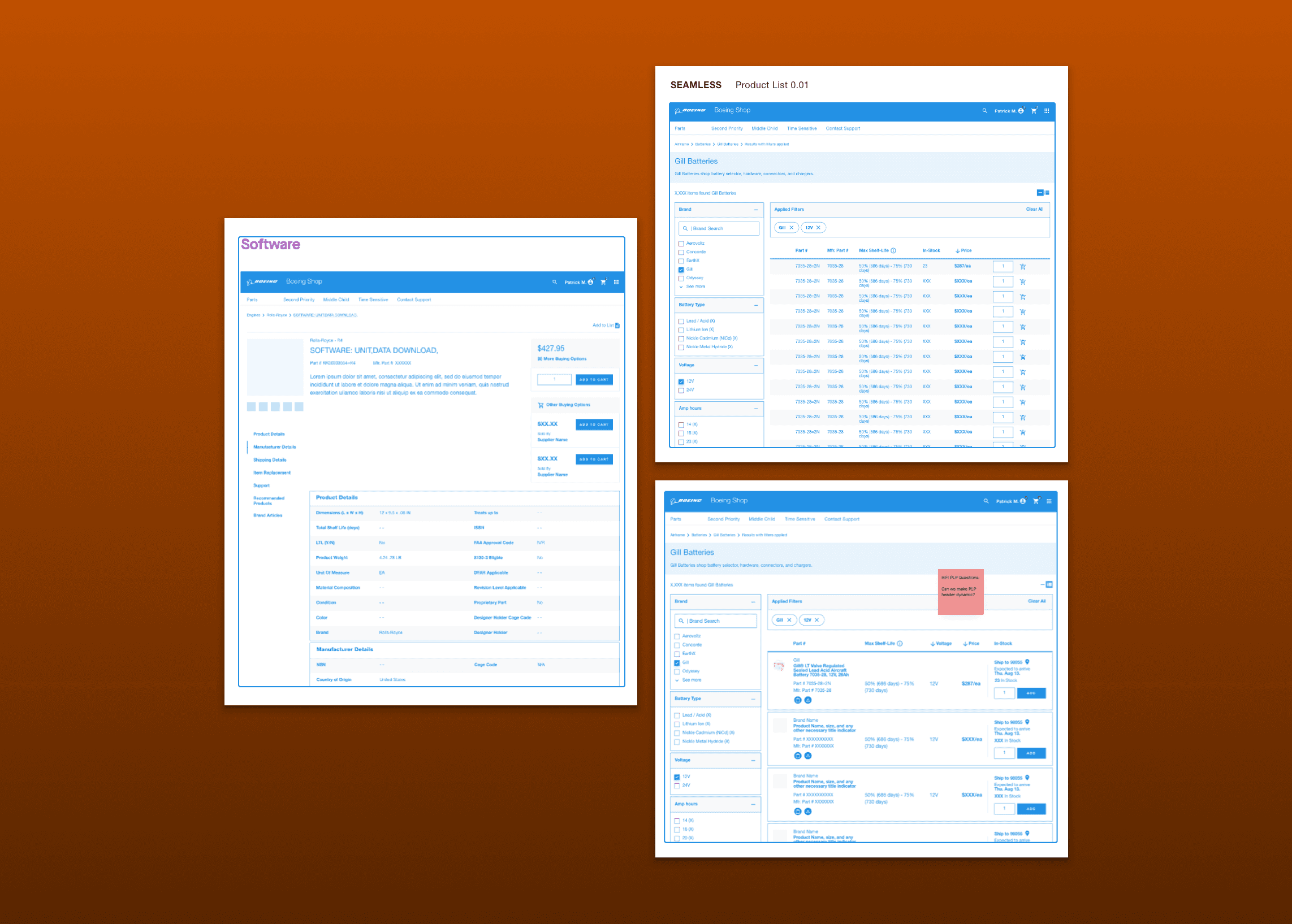
Competitive benchmarking against Grainger, Amazon, and Aircraft Spruce revealed clearer unauthenticated pricing models, contextual filtering, and stronger product detail page hierarchies. This informed the consolidation strategy.
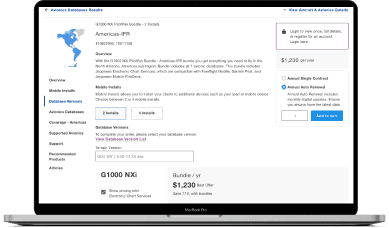
JEPPESEN CONFIGURATION & PRICING COMPLEXITY.
Within Jeppesen, stakeholder sessions and Qualtrics survey analysis identified additional friction specific to database subscriptions:
Authentication required before any pricing was visible
Overwhelming configuration steps — aircraft type, avionics device, region, subscription length
Confusion between bundle and individual database options
Terminology ambiguity around "mobile installs" and "database versions"
High cognitive load navigating subscription options
Competitive benchmarking against Garmin confirmed similar authentication constraints but highlighted opportunities for clearer configuration guidance and more structured pricing presentation.
Customer feedback was direct: "Make prices available without creating an account." "Simplify the renewal or purchase process for nav data."
2
Ideate
DESIGNING A UNIFIED COMMERCE FRAMEWORK
Rather than replicating existing channel patterns, I defined a unified interaction framework for:
Global search architecture
Contextual filtering logic
Product listing hierarchy
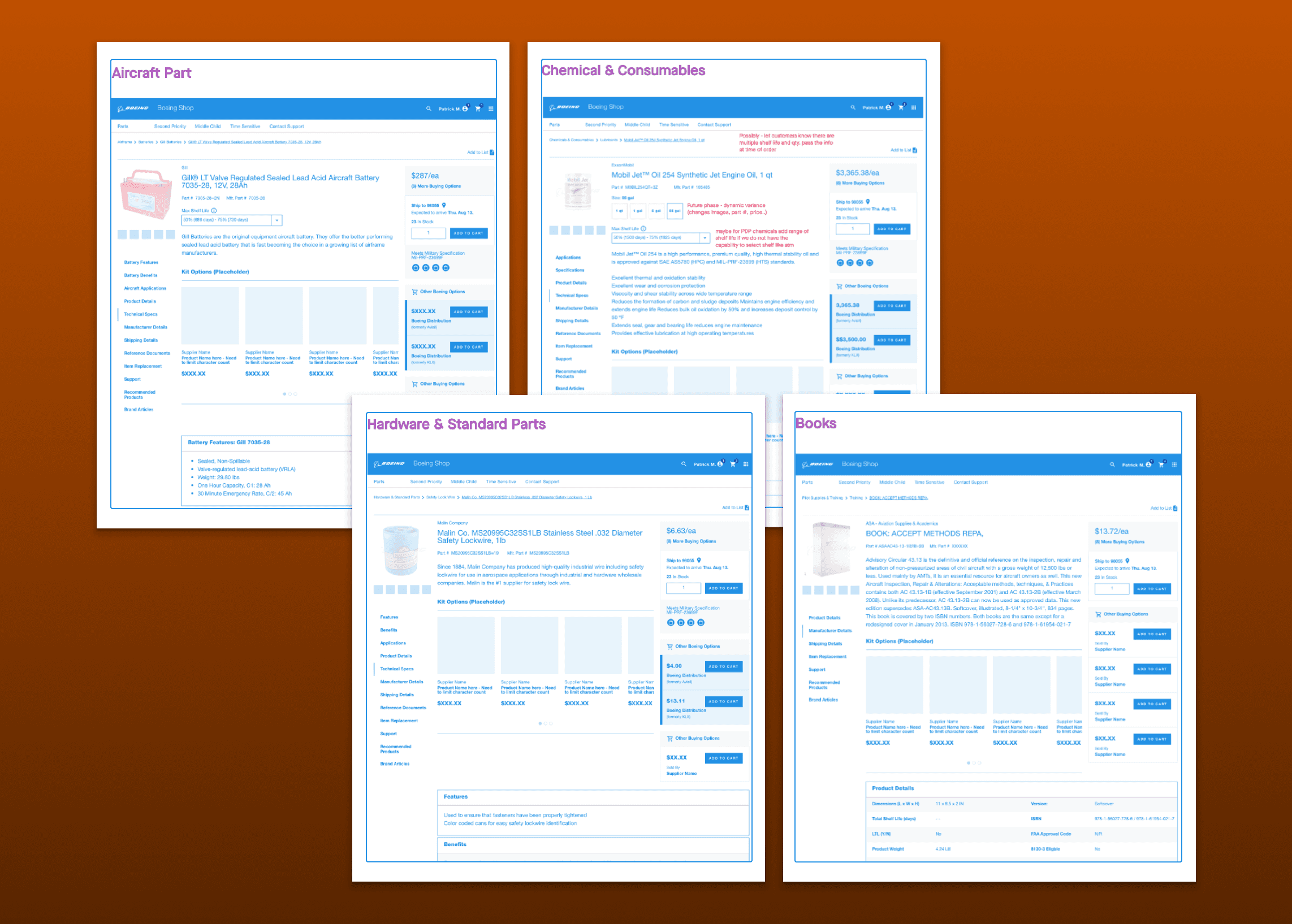
Product detail page (PDP) standardization
Pricing visibility strategy across authentication states
Key design challenges addressed:
Contract pricing vs. list pricing
Shelf-life-dependent pricing
Leasing and subscription models
Configurable digital products
This required balancing pricing transparency with contractual and regulatory constraints. Design iterations progressed from low-fidelity wireframes to validated prototypes supporting both authenticated and unauthenticated journeys.
JEPPESEN: SIMPLIFYING SUBSCRIPTION CONFIGURATION
For Jeppesen's database flow, rather than restructuring the underlying product logic, the focus was on the purchase journey itself. I redesigned the experience around a progressive configuration model:
Select Aircraft → Select Coverage → Compare Options → Validate → Purchase
Design decisions included:
Pricing charts inspired by modular SaaS presentation models (informed by Dropbox's configurable pricing approach)
Tooltips and contextual explanations for aviation-specific terminology
A unified product detail page supporting both bundle and individual database purchases
Clearer aircraft and avionics selection hierarchy
The goal was to shift the experience from "decode this system" to "guided configuration."

3
Test
VALIDATING SEARCH & PRICING TRANSPARENCY
Prototypes were tested across authenticated and unauthenticated states to validate:
Pricing visibility logic
Availability clarity
Filtering behavior
Product variation handling
Contract-based pricing transitions
Key insights:
Buyers prioritize speed and information access before being asked to authenticate
Contextual filtering improves task efficiency
Pricing transparency reduces friction in enterprise purchasing
JEPPESEN: FIELD TESTING AT EAA
I conducted in-person usability testing at EAA with 4 active pilots purchasing or renewing database subscriptions.
what worked:
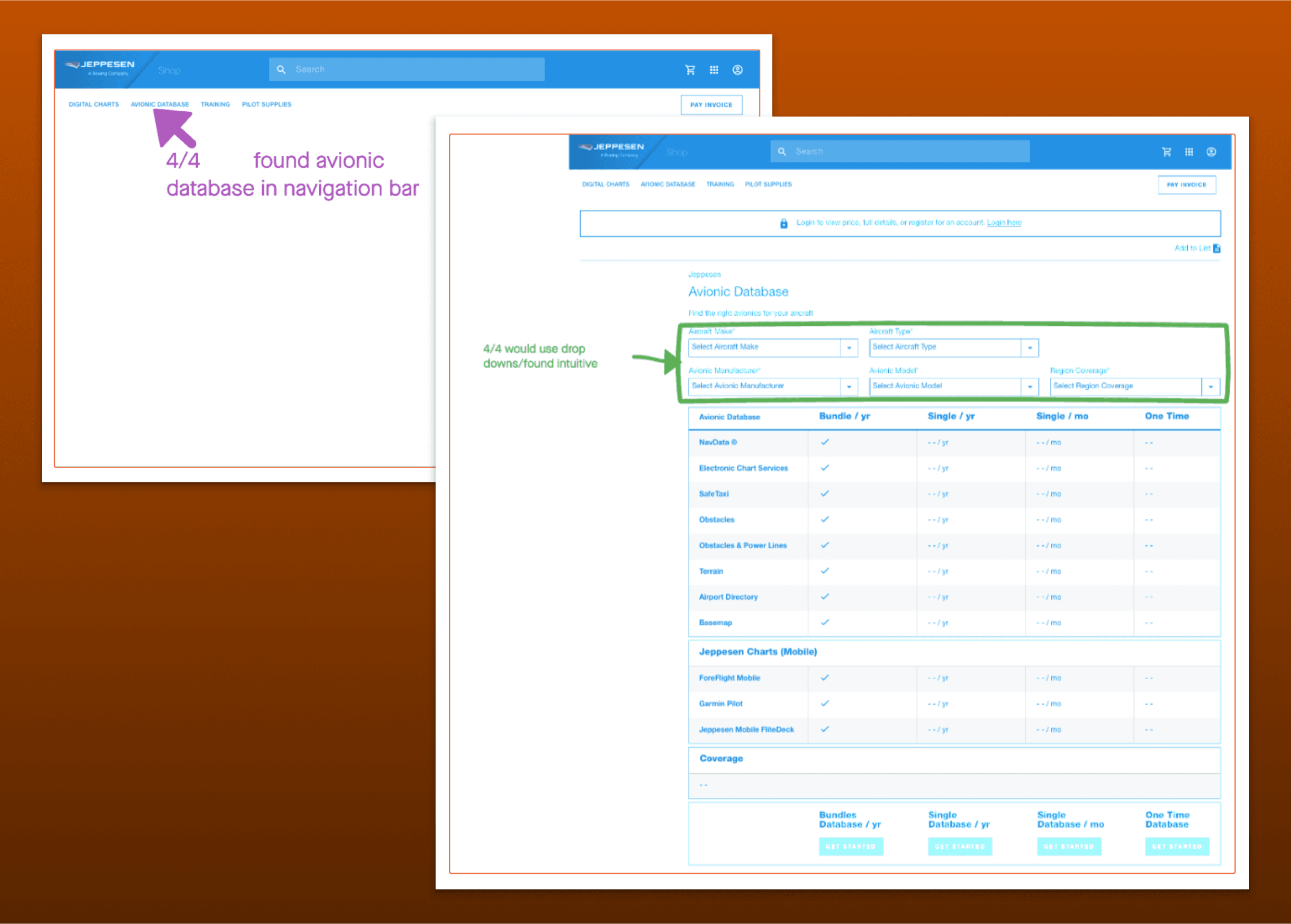
4/4 pilots located the avionic database through navigation without assistance
4/4 found the aircraft and avionics dropdown intuitive and easy to use
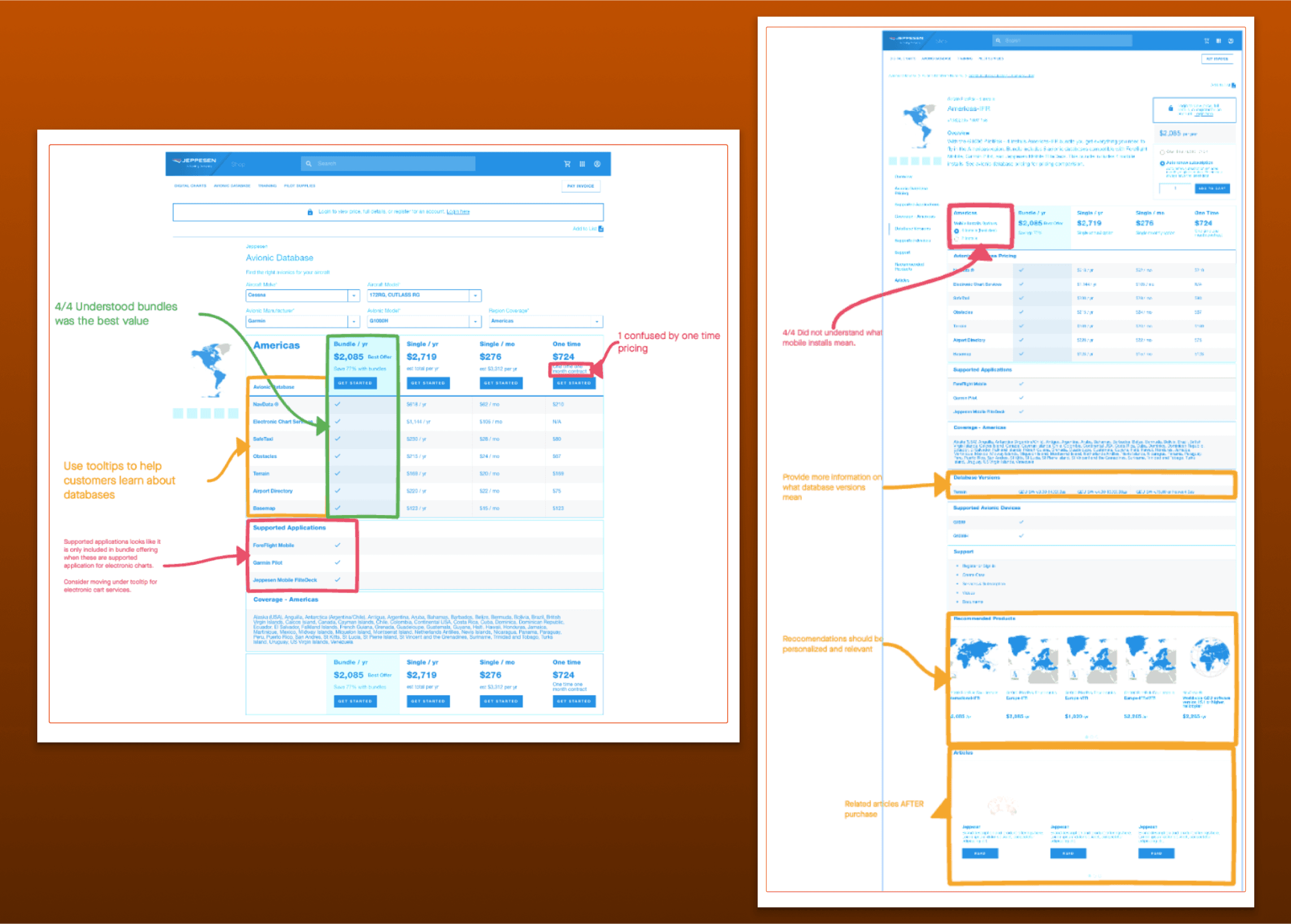
4/4 understood that bundles offered the best value
Tooltips successfully helped pilots understand database options
what needed refinement:
Pilots did not understand one-time pricing vs. annual pricing
"Mobile installs" terminology was unclear
"Database versions" created confusion
These findings directly informed iteration on pricing chart structure, terminology, and the product detail page.
4
Delivery
PHASED MODERNIZATION STRATEGY
Given the scale of the consolidation, the initiative was structured into two phased releases.
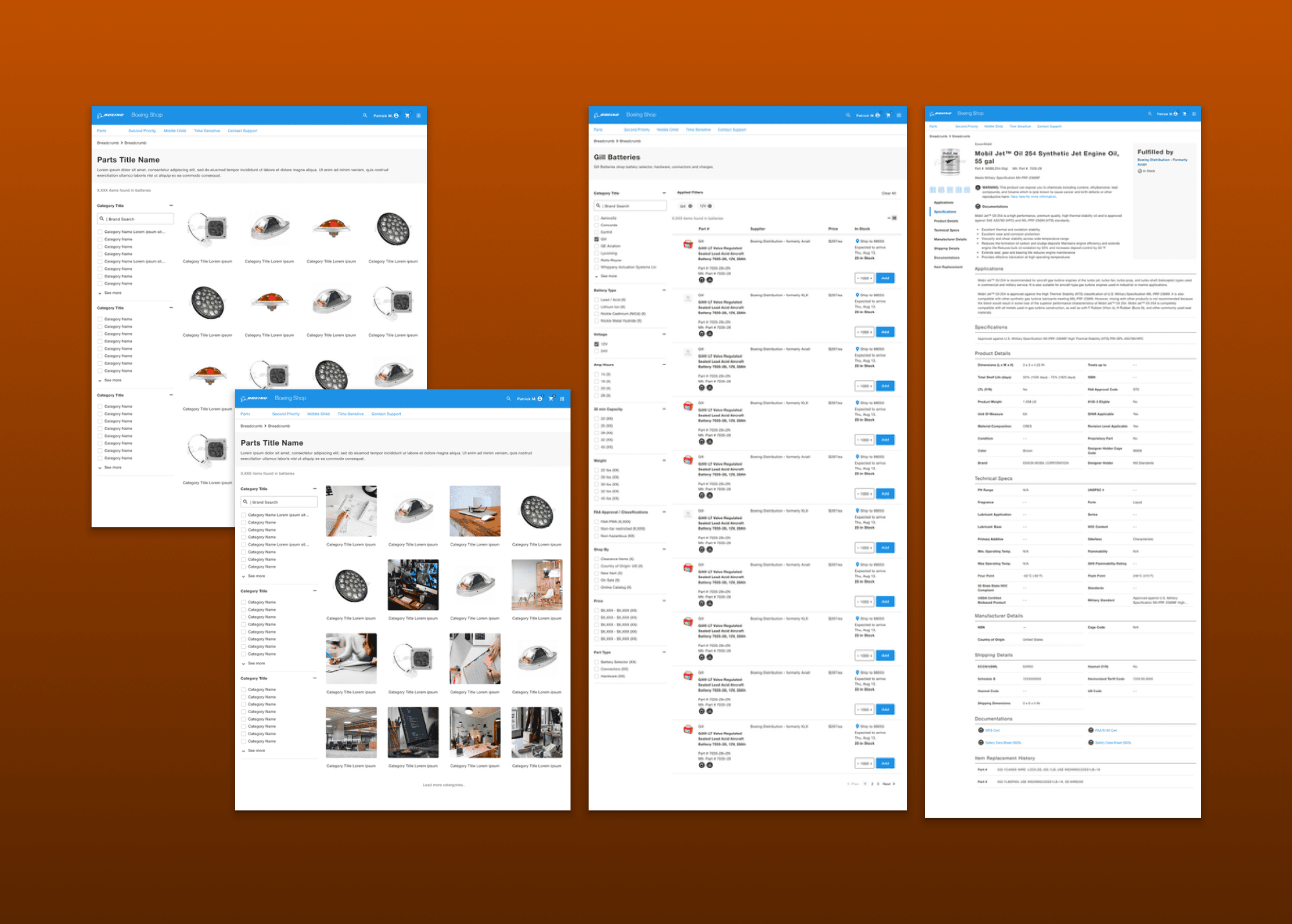
PHASE 1
Phase 1 focused on core structural alignment and visual modernization — establishing consistent search, product listing, and product detail page patterns under the new Boeing Global Services design system.
PHASE 2
Phase 2 expanded into deeper pricing logic, advanced product configuration, and continued refinement toward the ideal unified state.
This incremental approach reduced design debt while enabling long-term platform cohesion across Boeing's commerce ecosystem.
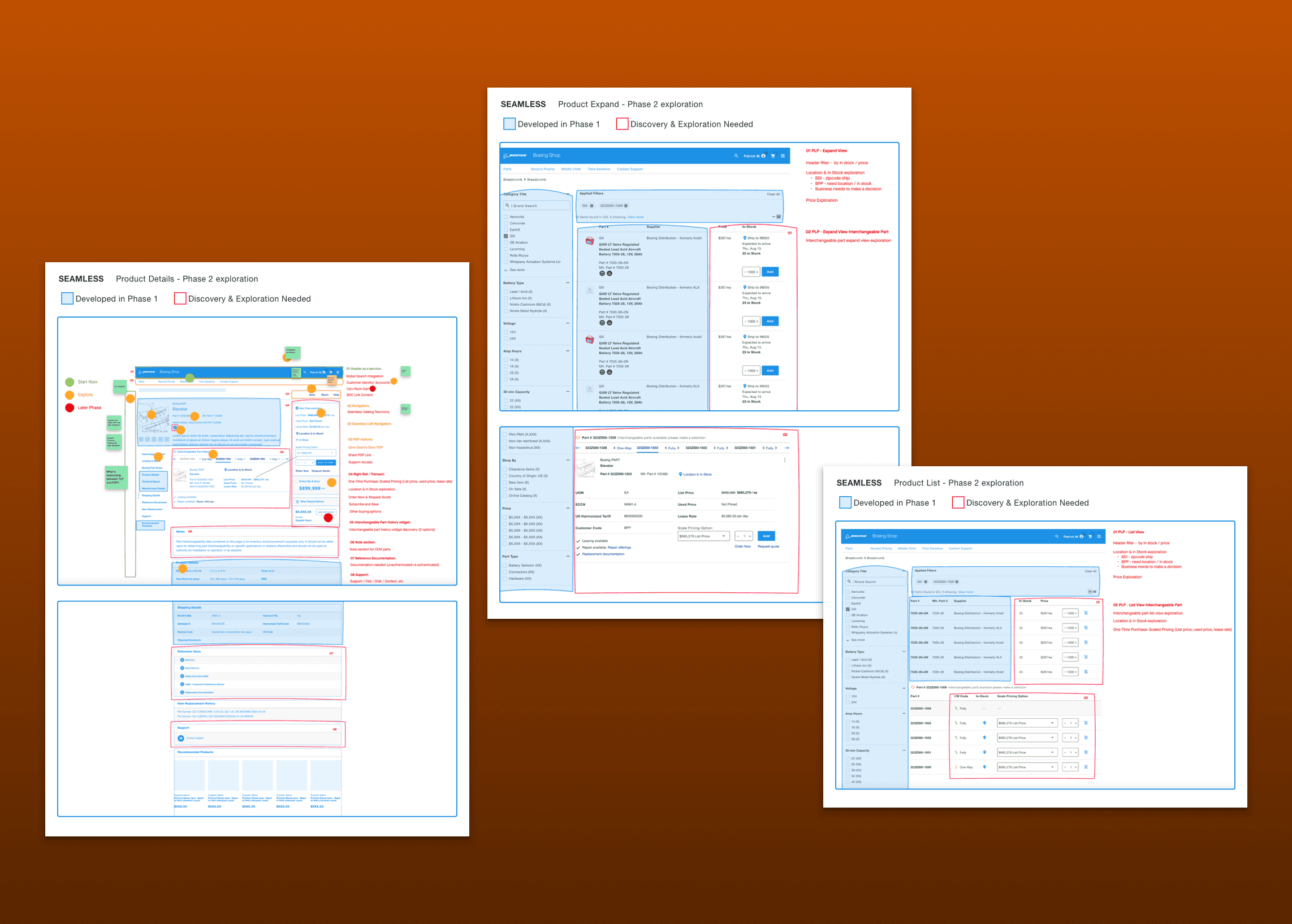
UNAUTHENTICATED FLOW
Browsing Before Login — pricing visibility and product discovery without an account
AUTHENTICATED FLOW
Logged-In Experience — contract pricing, availability, and full product details unlocked
JEPPESEN: REFINED CONFIGURATION & PRICING
Following EAA testing, the Jeppesen flow was refined to address:
Clearer pricing transparency structure
Updated terminology with contextual explanations
Streamlined aircraft and avionics configuration hierarchy
A unified product detail page supporting both bundles and individual databases
The redesign aligned Jeppesen's commerce experience with Boeing's broader design system while preserving the technical and regulatory complexity aviation products require.

ADDING AIRCRAFT DETAIL
Aircraft & Avionics Setup — guided configuration capturing aircraft type and device details before surfacing relevant database options

PRICING OPTIONS
Database Pricing — configurable pricing chart showing bundle and individual subscription options with tooltips for aviation-specific terminology

PRODUCT DETAIL PAGE
Database Product Detail — unified view supporting both bundle and individual purchases with clear pricing, coverage options, and configuration validation

OUTCOME
This initiative brought Boeing's fragmented commerce ecosystem closer to a unified, scalable platform — establishing consistent search, pricing, and product detail patterns across channels. The Jeppesen redesign simplified a technically complex subscription flow validated with real pilots in the field. Together, both workstreams contributed to the Boeing Global Services design system and laid the foundation for long-term platform cohesion.